
What Nez Perce County Property Tax Records Hold
Start with the record you need. One portal rarely answers everything. The Assessor is the source for valuation, classification, and exemption questions, while the Treasurer supplies billing, levy, delinquency, and tax-deed information. For a Nez Perce County property search, the county map adds parcel and district context, though it never replaces either office's dated record.
| Field | What It Shows | Where |
|---|---|---|
| Market-value assessment | County estimate made under Idaho's 100% market-value standard | Assessor and assessment notice |
| Classification and improvements | How land and improvements enter the assessment | Assessor record |
| Exemptions or reduction | Relief applied after eligibility and filing | Assessor application and notice |
| Bill, balance, and payment | Tax charged, amount paid, or amount still due | Treasurer bill or response |
| District levies | City, school, sewer, fire, port, and other components | Treasurer levy sheets |
| Tax-deed status | Current process or auction notice for delinquent property | Treasurer and Board records |
Idaho's assessment standard is not a sale-price report. District budgets, voter-approved items, exemptions, and boundaries all shape the final Nez Perce County tax bill, so keep the tax year beside every figure.
The Tax Calendar Starts January 1
The Assessor's important dates page sets January 1 as the assessment and property-tax lien date for Nez Perce County. Assessment notices go out by the first Monday in June. Appeals to the county Board of Equalization are due by the fourth Monday of June. Bills are mailed by the fourth Monday in November. First-half or full-year payment is due December 20. The second half comes due June 20. A deed recorded after January 1 can name a new owner while the year's notice or bill still reflects earlier roll or mailing data. That mismatch is not an error. Compare source dates, then ask the Assessor or Treasurer which record has refreshed.
Note: Record deed, assessment, notice, bill, and payment dates separately rather than calling every screen current.
Annual Market Value Is Not a Fixed Tax Rate
Nez Perce County assessors must value property at 100% of market value under Idaho State Tax Commission rules. Statutory exemptions apply where they qualify. Taxing districts set their own levy needs after that. A bill can climb even when assessed value holds steady. Budgets, bonds, overrides, exemptions, and district boundaries can all shift.
County materials also cover market approaches and the inspection cycle. State ratio studies compare assessments against sales to check uniformity. A countywide ratio or category total never appraises one parcel. For 2025, the state report lists a Nez Perce County grand total of $6,141,891,878 across reported categories. It excludes the homeowner exemption. Treat that as county context only. It is not a parcel value trend.
Look Up a Nez Perce County Tax Bill
The GovPros tax-payment endpoint takes a parcel number, payment amount, payment method, and email. The county offers no public bill-history search there. Use it to pay a known bill, not to guess the balance or prior-year status of an unfamiliar parcel.
- Find the RP parcel number through the county map or an assessment notice.
- Ask the Treasurer for the specified tax year's bill, balance, payments, delinquency, and district breakdown.
- Compare valuation and exemption lines with the Assessor's dated record.
- If payment is intended, enter the confirmed amount in GovPros and retain the printed or emailed receipt.
- For older delinquency, check the tax-deed process and current auction page with the date of access.
- Assessed value
- The Assessor's value for the dated roll, before or after applicable exemption treatment as the record specifies.
- Levy
- The district rate or charge used with taxable value to produce a portion of the bill.
- Homeowner exemption
- Idaho relief for qualifying owner-occupied property after a valid application.
- Tax lien
- The statutory claim associated with property taxes; January 1 is the county's published lien date.
Pay Online, by Mail, at the Counter, or Drop Box
The Treasurer's office sits on the first floor at 1230 Main Street in Lewiston, and the phone number is 208-799-3030. You have several ways to pay a Nez Perce County tax bill. Bring payment to the counter. Mail it to PO Box 896. Or use the courthouse drop box at the northeast public entrance. Card and electronic-check payments run through GovPros.
Online fees are published at 2.39% for credit or debit, with a $1.95 minimum, while an electronic check costs $0.95. Payments under $14.99 carry no fee. You may make partial payments against delinquent, current, or future taxes. Missing a bill does not excuse the debt. The county sends no reminder when the second half comes due.
Note: Confirm the parcel and amount with the Treasurer before using a payment form that does not display full bill history.
District Overlays Explain Nearby Bill Differences
Levy differences between neighbors usually trace back to district boundaries. The Treasurer's taxing-district resources list contacts and levy sheets for city, school, sewer, port, fire, cemetery, and other districts. A boundary can cut right through a block. Two parcels side by side may sit in different districts. Assessment alone never explains that gap.
Check the county GIS overlays first. Then confirm each line against the tax bill or levy sheet. Treat city, reservation, ZIP, or Area of City Impact layers as routing clues rather than tax or title decisions. Note the map date too, since annexations and boundary changes can shift later Nez Perce County property tax bills.
Compare like with like. Check tax year, exemptions, taxable value, and every district before attributing a bill difference to valuation.
Homeowner Exemption and Circuit Breaker Differ
Nez Perce County treats the homeowner exemption as one kind of relief. The property tax reduction program is another. Each has its own rules. The Assessor's FAQs walk you through the routing questions. Those questions decide which one fits a given parcel and owner of record.
The 2026 circuit-breaker instructions spell out the numbers. Applications are due April 15. They use a household-income threshold of $39,130 from the prior year. Qualifying owners can see up to $1,500 knocked off the tax bill, subject to all eligibility rules.
Occupying the home is not enough by itself. Before you count on relief showing up on a notice, ask the Assessor which application applies. Ask what proof is needed. Ask which tax year it covers. A missed deadline or a missing document can affect that year's record. The owner could still qualify later on.
Delinquency Adds Charge and Interest
Fall behind on property taxes in Nez Perce County and costs start stacking. The Treasurer adds a 2% late charge. Interest runs 1% monthly, beginning January 1 or after the second-half deadline, as applicable. Always request the office's current payoff figure instead of working from an old tax bill. A partial payment can shrink the balance. It may not clear away every consequence of delinquency.
When unpaid taxes go far enough, the county tax-deed process takes over. Nez Perce County notes that Idaho does not sell tax-lien certificates. Instead, tax-deed property moves through a public auction run by a board. Legal notice is generally published in the Lewiston Morning Tribune at least 10 business days ahead of the sale.
A No-Auction Result Needs a Date Stamp
A property tax records check can turn up a blank as easily as a result. The official tax-deed sale page publishes no scheduled auction when none is set. That answer is only trustworthy for the day it was read. A later Board action or legal notice can add parcels to a sale at any time. Anyone tracking tax-deed parcels in Nez Perce County should note when they checked, then confirm current status with the Treasurer before acting.
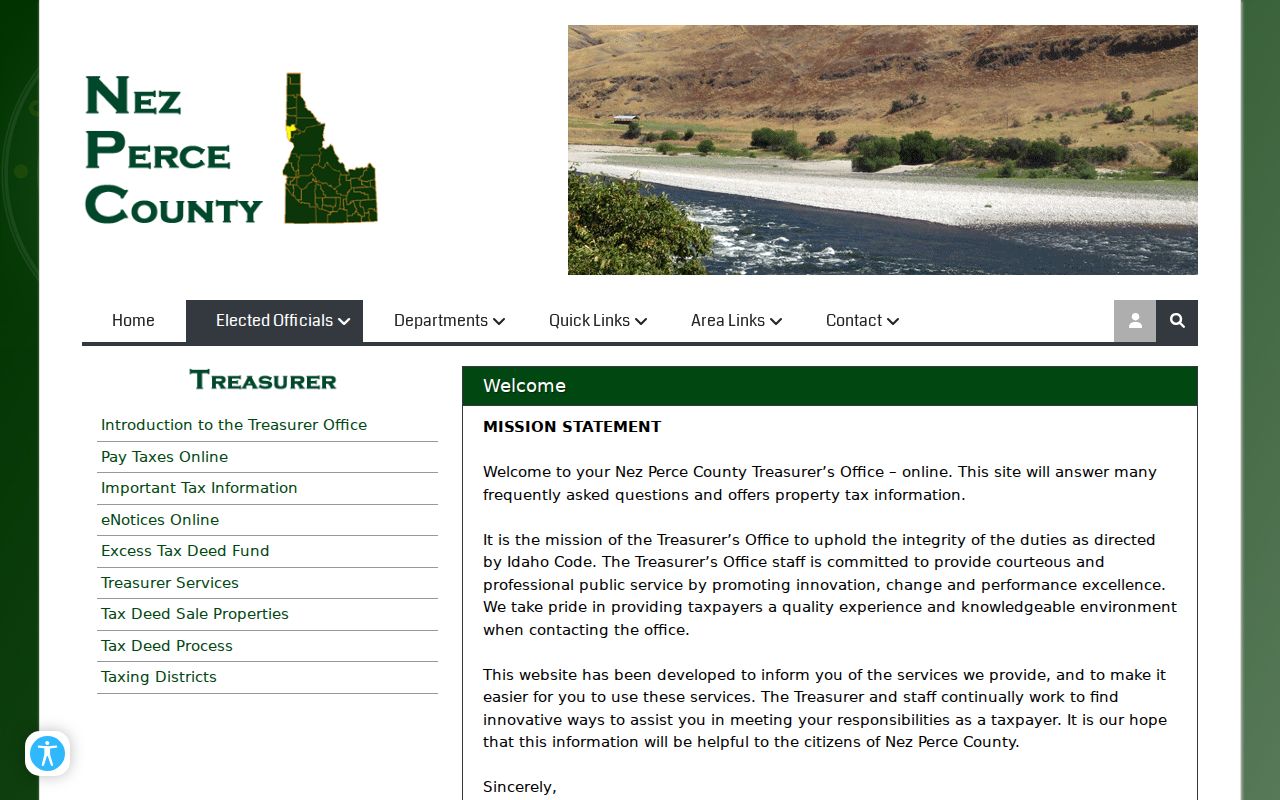
The page reflects one moment, not a lasting promise that no tax-deed parcels will be offered in Nez Perce County.
GovPros Is a Payment Form, Not a Tax History
The county's online payment tool works well once the correct amount is known. The GovPros form collects a parcel number and payment details. It does not serve as a public parcel-level history search. Treat Nez Perce County property records on the tax side as coming from the Treasurer. GovPros handles the transaction itself.
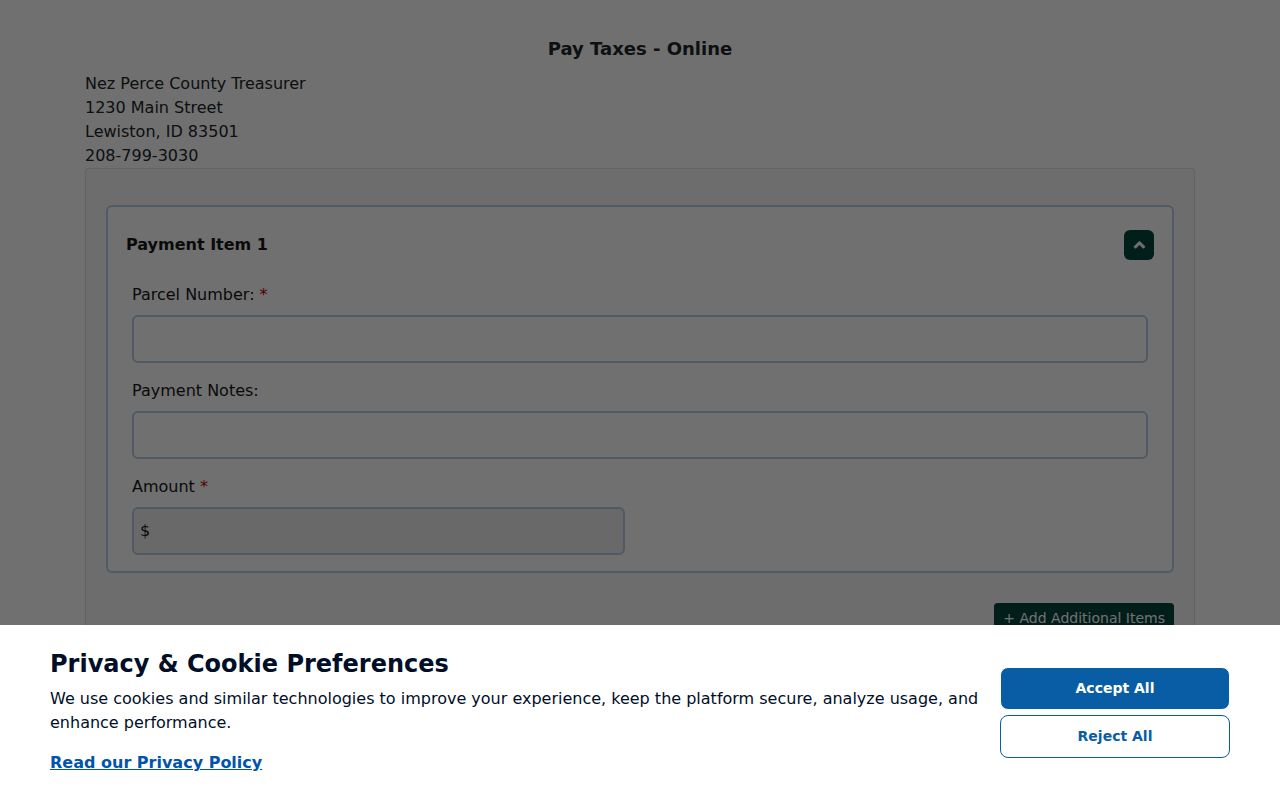
The sequence matters. Get the bill and its status from the Treasurer first, use the form to pay, and save the receipt with the rest of the property tax records.
Appeal a Nez Perce County Assessment
Open the June assessment notice right away. Call the Assessor to learn the parcel facts and how the county set the value. Still disagreeing? File with the Nez Perce County Board of Equalization by the fourth Monday in June. Strong evidence includes corrected property characteristics and dated photographs. Comparable sales help too. An appraisal or documents showing where the county's inputs went wrong can also support the case.
A further appeal can reach the State Board of Tax Appeals. District court is another option within the allowed period. An appeal questions value or classification only. It never replaces paying, or formally contesting, a Treasurer bill through the proper channel.
Appeal window. File the Nez Perce County Board of Equalization appeal by the fourth Monday in June and verify that year's exact date and filing requirements.
Build the appeal around the assessment date and the valuation method the county states. Keep factual corrections apart from an argument built on comparable sales. These include square footage, use, condition, and improvement details. Identify each comparable by parcel and sale date. Explain the differences that matter. Keep the notice envelope or proof of delivery. A broad claim that taxes are simply too high tells nobody what the dispute is. Is it value, classification, exemption, or levy?
Payment and appeal run on separate tracks. Ask the Treasurer what remains due while a value challenge is pending, and follow the official instructions for that year. When the problem is an omitted homeowner exemption or reduction, ask the Assessor about the fix. A correction, a late route, or a next-cycle filing may fit better than the Board process.
After a decision arrives, keep the original notice and petition. Hold the evidence, hearing record, and written decision too. Save any revised assessment and the later tax bill. Compare the corrected value and exemption lines against the Treasurer's bill before closing the file. A later bill can carry district changes unrelated to the appeal outcome. The full explanation still needs taxable value, each levy component, payments, and the tax year.